© Dmitrii Vakulin
Rundgang: Some Kind of Phantasm

Author: Dmitrii Vakulin (UGC)
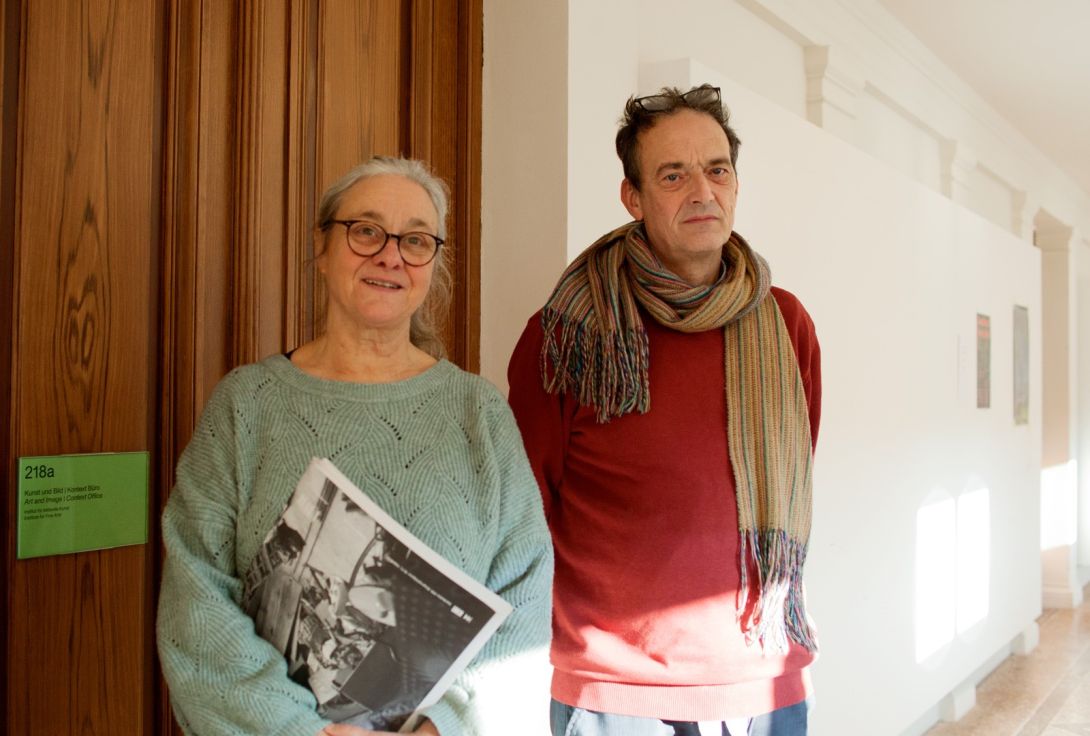
In an interview with Vladislava Kachurova and Dmitrii Vakulin, the professors Alice Creischer and Andreas Siekmann of the studio Art and Image I Context reveal their personal artistic philosophies and teaching approaches.
Throughout the interview, Alice Creischer and Andreas Siekmann reflect on the role of art history, the complexities of identity politics in the art world, critically examining its implications and challenges. Additionally, they share their perspectives on the nature of political art and its impact in today's society. As a highlight, the professors offer their thoughts on the upcoming Akademie-Rundgang, the open days event at the Academy.
Today, we are talking to the professors of the studio Art and Image I Context.
[Professors are talking to each other and joking how they would go through the spaces and just change the paintings of students in the studios and how surprised the students will be on Monday.]
Vladislava: Could you please introduce yourselves and share a bit of your background?
Alice: Okay, I'll start by introducing Andreas Siekmann. Andreas Siekmann studied Art in Düsseldorf and also history, a little bit, and then he moved to Berlin. He is well-known for his art in public space projects as well as for his incredible drawings, and digital drawings, about economic injustice, I would say. He lives in Berlin, has two children, and together with me, he is curating sometimes a bit huge projects, art projects, yeah.
Andreas: Okay, my neighbour here is Alice Creischer. I've known her for more than 35 years; it's like this. In part, we work together, we write together, we make projects. We come from the background of self-organization. So, we also make art fair for artist groups or on economic political issues. And also, we make a lot of critiques on the politics of exhibition, so that you build also a kind of public field. And I think that we are here now teaching in contextual painting. Alice also made one painting, like “painting-painting,” you know. So we can say that we draw and paint, but we are not this kind of “painting painters”; it's not like this. But we feel that we can do this because we reflect on so many different aspects of what is an art field and where also painting can take place. For us, it is the self-understanding of what contextual paintings are. For most students, who we asked in our peer-to-peer, ‘context’ means you can do everything, but then it's empty if you make everything. So, therefore, I feel what we can do for students is to give some advice on how to build and also to be responsible for building a field of a political stage that has the name art.
Vladislava: Do you have any major topics or themes that you are currently exploring in your art?
Alice: I guess one big issue we were preoccupied with was art in a colonial context. We made a project about colonial paintings in the Andean Baroque, and we did a lot in Potosi. And we compared it with the exploitation we have in the present. So, we were following this painting concerning the primitive accumulation and how it is going on. This is what occupies us for more than 10 years, something like that. And this is what we're doing together and our projects, which we are doing personally, are also around the issue of economic critique, on one side. And maybe... This is, I think, the main issue. And then there is also this question of coloniality. But the main issue is economic critique, I would say, right.
Andreas: The thinking, economic thinking, and economic, um, imaginary that people get and how difficult it is to get rid of these kinds of conditions. You see it and witness it in the time of limited resources. People still believe in a free market, and we know a free market is only possible if you have unlimited resources. So with limited resources, it's not possible to have a free market.
Vladislava: How do you balance between your personal projects, your theme of research, and now your academic responsibilities?
Alice: As we are very new here, we are just trying out how to do that. And the first thing is that we value art history a lot. Therefore, one of our principles of teaching is to make art history somehow traceable for them. I would not say: ‘Yes, you have to learn artist history, blah blah blah.’ No, it is more about that they can appropriate it, and they can see the present in art history. I think this is one of our teaching joys to do. That is on one side, and on the other side, it is in the practical artistical doing. That this has some kind of dedication beyond their own subjectivity. I guess that this subjectivity is some kind of trap because you have to go beyond your subjectivity, and you have to dedicate your work; in a narration, or in a movement, or in your neighbour. Something like that. And then the work gets more intensive. This is what we, yes, I think these are some first remarks about our doing, which is just beginning in teaching, yeah.
Andreas: But there's a big effort because there are a lot of reasons why arts in the theory field, since the post-structuralist movements, why this kind of identity politics was a kind of substitute for left perspectives and theory. So we know this is a kind of big effort. But people who are now in this kind of stuff, it's very difficult to get them out because if you give advice from these kinds of colleagues of works of the last 400 years, they have the feeling ‘oh, it's narrow-minded, there's not a lot of place for me to express myself’. And they don't see that this kind of resonance ground is giving more power because you work with the efforts and the ideas of the colleagues together, with your background, because it's your history and not The History. And this kind of... But it's very difficult because they have the feeling they lost too much time to get their ideas, and that I think not. You know, in my study program, and we studied in Düsseldorf in the '80s, all the time say: ‘If I learn too much art history, I lose my individuality’ or… and it's false and it is so very narrow-minded, we know it from the 80s, this stuff.
Vladislava: Are there any ways you try to integrate your experience as artists as art critics into your teaching process? Maybe you have got something which is a part of your philosophy and you try to get it through?
Alice: I guess, what we did this semester or what we tried out, was a reading group. We read together some parts of “The Aesthetics of Resistance” by Peter Weiss. That was very difficult for the students because the language is very poetical and it is in a very special time, the time of the '30s where the fascists were in Germany, and also the Civil War in Spain. And there are a bunch of people, of young people, who try to look at art and try to figure out what can art give us in this situation? And how can art strengthen our resistance? I think it is a wonderful book because you can just transpose (note: transfer, tranlsate) the question which these young communists were asking in the '30s to the situation now. And this is what we did with the students, and then also we looked at the paintings they were talking about: like Picasso’s “Guernica” or Delacroix. Most of them really didn't know what this is about, and I think, this approach we would try to do more, so that you can have a view on the political substance of artworks. And I guess that this is very near to the way we are also working personally, yeah.
Andreas: We can say that also Peter Weiss described the Altar of Pergamon in the Berlin Museum. The famous altar from Persia, today it's Turkey, and it was a temple it was built for the gods and for the Attaliden. It's completely fragmented like a big puzzle. They installed it in Berlin, together it was one of the symbols of the German Reich in 1871 it was bought and showed, also in the sense of a genealogy of a state, you know, what is the legitimation of the state, what is the face of the state and that was done by this kind of gesture. And at the same time for the communists (how it's possible with this kind of bad stuff to instrumentalize art for your interest), and for them, it was Peter Weiss was describing this, for them it looks like a class fight between the Attaliden and the gods. So for us, it's the first illustration of class fight and I think it was created 800 before Jesus Christ, it was like this. So this kind of things. And we witness this in anarchist artist groups in the '20s when they make magazines and they describe what we can do with modern art outside from the bourgeois perspective, what it is. And how we can look through the art in our sense so that we don't give up this field, because we have a desire on this field and we want to be part of the field, but we don't share the bourgeois or the national instrumentalization of art. That is all the time happens, you know. And that is why art also in the nationalizing is a very dangerous field, because then you have the aesthetic of politics, you know. That is like this.
Vladislava: Now, as you know, there is a lot of preparation going on in the Academy and everyone is getting ready for Rundgang. What is Rundgang from your perspective and what does it mean personally to you?
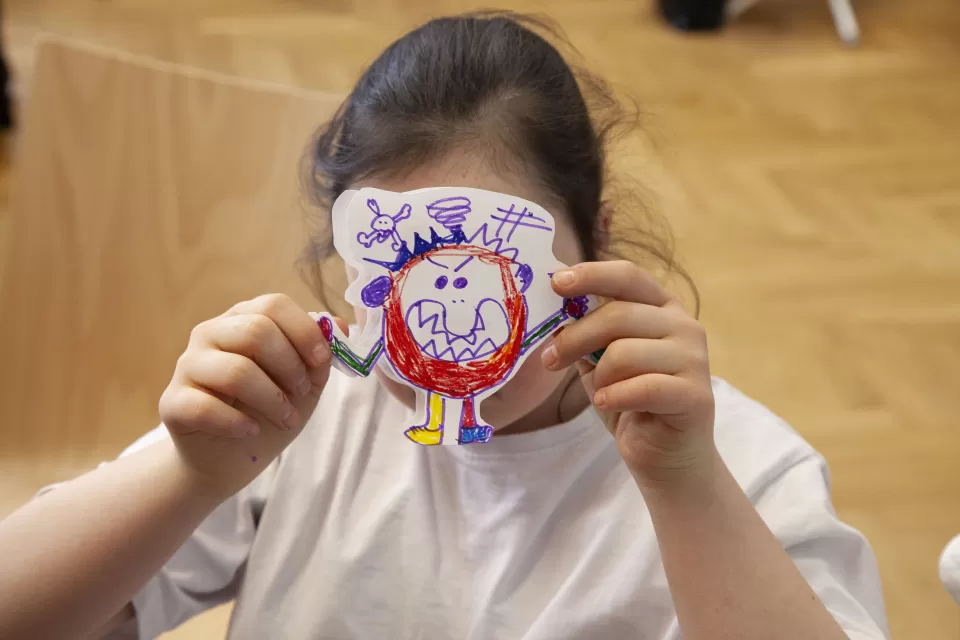
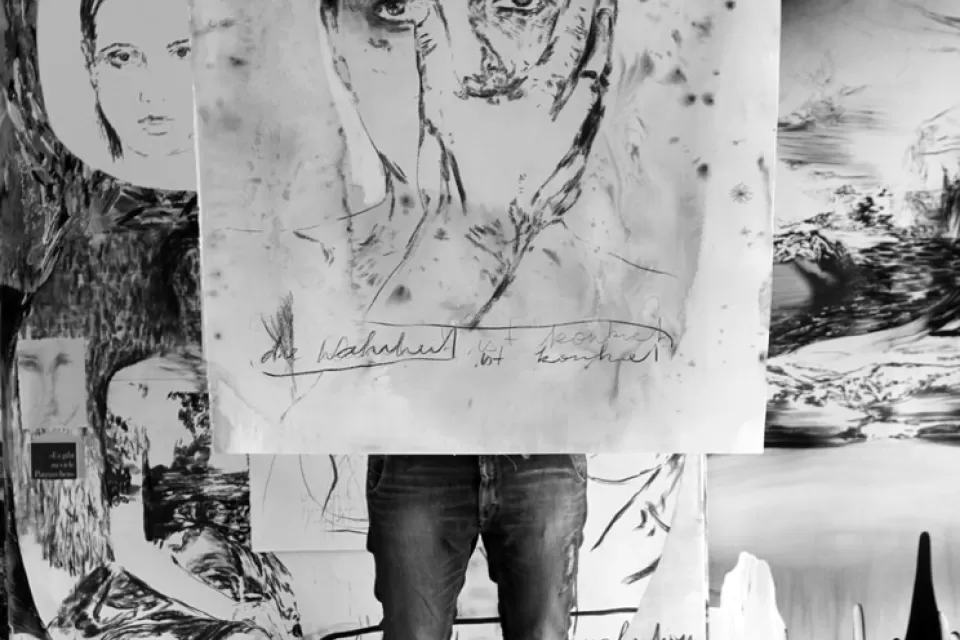
Alice: "I think this is really difficult for us to say, because, of course, we see the Rundgang as some kind of Phantasma. A lot of people have this kind of imagination, or maybe we project that a lot of people have this kind of imagination. The curators, the big galleries are coming and discovering me. But I think it is more in the structure of the Rudgang itself that it has this kind of imagination with it. And for us, it is and I think we also can have our mockery about it, yeah. But the students are in this trap; they are dependent on this. Some are really selling on the Rundgang, and it is crucial for them, so I'm a little bit more modest now with my big mockery about this Rundgang. And it is commercial and so on. What do I have to say? I get my money per month as a professor, but as these students are having this imagination, I cannot say 'wooo.' But what we try to do now with Rundgang is that it makes also joy and not only fear, because what I feel now with the students is that they were really afraid. 'Oh, that is my place, I have to put my work only here,' and it was not a joyful feeling. And we try out now: 'Okay, you, there is no fence between you, we can also hang in a mixed method and all of that. We can do Petersburger hanging, we can do a huge tower and all of that,' so that they get away from this kind of afraidness, from this kind of feeling. I think the Rundgang is a very good example of subalternity, and to go out of this is one little step. We try very, very little steps to go out of this, because we cannot, we cannot say in a big gesture: 'Oh, we are closing the spaces and we are doing only lectures!' something like that. This is really arrogant, it would be very arrogant."
Andreas: "It happened in our study time. I know there was a painter class where we put all the paintings on the floor and we put chicken on it, pecking and scratching the paintings. There was only a fence in the entrance, so it was like this. Or we closed the whole door because at that time it was very commercial. Because at that time in the '80s, the market was in Cologne, the big galleries and New York people came there, and it was like this. So people expected it, and it was a little bit like this. Also, like what we talked about just before the mic was on, that you related and if you want to be in the art market, you are all the time too late, because you follow the fashion and the fashion was developed, and you only be the second copy, and so you can get a little bit of success but only for one year or one season. And then you are overwhelmed, and then you drop down. So you have to find a way that you have a field and that you are a complex personality, so that people take care of you and not that you take care of this kind of field like a running rat. So, it will be good afterwards because we are new, perhaps next semester, to talk a little bit about the market. What is the market and what is the art market and what does it mean.
Alice: It's also something that students have already a gallery, but that was all the time like that. In the '80s in Düsseldorf, where we are coming from, yes, that was like that. I think it is also difficult to say something: 'Oh, the horrible art market.' No, you have very good galleries, which are very supportive, and you have bad galleries. And also, we are now in Venice for some research, and look at this art market in the 17th century, it is amazing! What you can learn there, to speak from history again. With our students, we will go to Venice, now in March, not to the Biennale, in March, to look at this art market, for example. And to see what we can learn from that. Yeah, so this is a good perspective.
Vladislava: So you already have plans for the next semester, which I think is really amazing! If we go back to Rundgang, are there any parts of this event that you feel excited about?
Alice: Yeah, I think it's exciting that the students are working very much together. This is very exciting. And I think there are a lot of projects going around in the house, which are very exciting. But as we are greenhorns, we are also very curious because we don't know. So yes, we get a little bit of a notion now about the structure, but it is still not the whole. So I guess to come to Rundgang and to go around and to look is exciting, yeah.
Andreas: Yeah, you can say that. With all the students, it was different before we came, so it will be changed a little bit now. The new students who decide they want to study in this kind of program — it's different, it is. So, for us, it's new because we worked in so many collective self-organization projects. We can do this because we can go through the structure and think about the production of the art itself. I think it's too soon that we are here, that you cannot see not now, but they make a step in the sense that we can say they react to this kind of input or this kind of content. It's too quick, perhaps, because art needs a long process, you know?
Alice: Anyway, we are looking forward to our first Rundgang, yeah.
Vladislava: Okay, I’ve run out of questions. Thank you very much.
Further articles
Studying at the Institute of Fine Arts - Studio Art and Image | Context

Author: Barbora Chen (Red)
How to Apply for Academy Scholarships
Author: Dmitrii Vakulin (UGC)