© Liudmila Anoshenkova
Studying Restoration: Marah’s Journey

Author: Liudmila Anoshenkova (UGC)
A student talks about a typical week studying conservation-restoration.
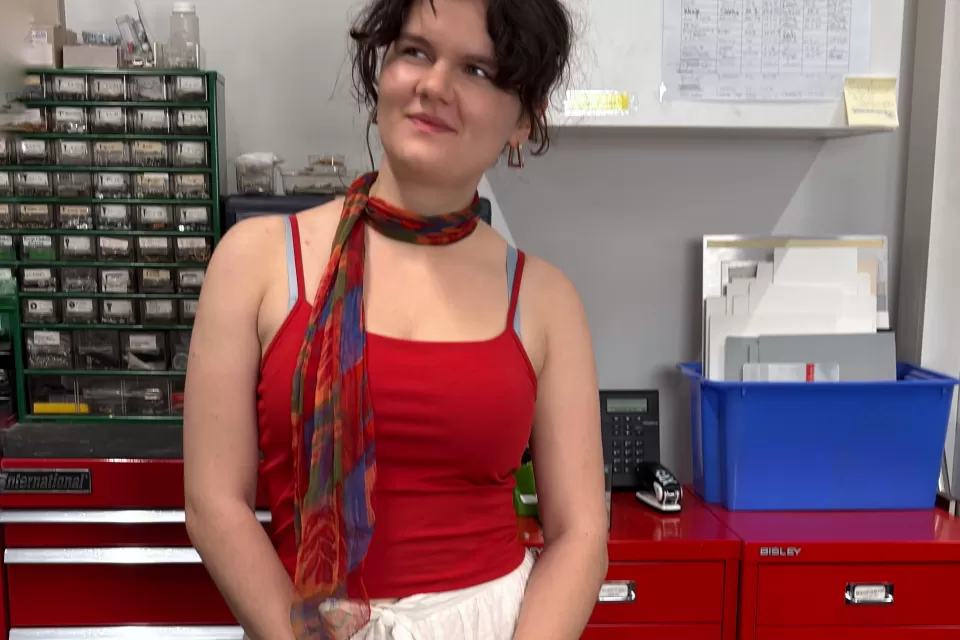
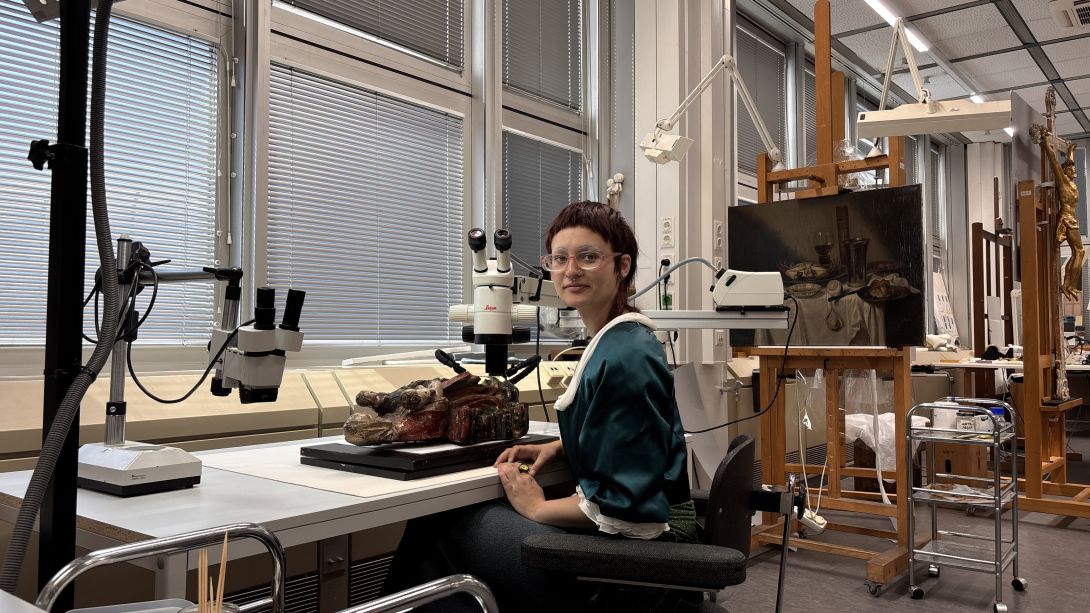
“Bringing art back to life” A student story from the Academy of Fine Arts Vienna. Marah uses all pronouns, Marah studies Conservation and Restoration, specializing in the restoration of paintings and sculptures.
“I wanted to work with art directly, but I didn’t want to produce it. Restoration felt right — bringing something back to life, that’s what I really enjoy.”
Why Restoration?
Marah was drawn to the world of art, but not through creation. Instead, they found their path in restoring and preserving what already exists.
"Restoration is where craft meets science, history, and care. It’s a practice of patience and precision."
Why Vienna?
During the pandemic, Marah couldn’t visit the Academy in person but chose it after a warm virtual exchange with current students. “They sent me photos of the campus and described the community as kind and supportive. That made my decision easy.” Vienna's artistic legacy and the Academy’s reputation sealed the deal.
What It’s like to study Restoration
The Restoration and Conservation program is considered one of the Academy’s most demanding. It combines scientific knowledge, historical understanding, and hands-on skills.
A Typical Week in Restoration:
Monday–Tuesday: Lectures (natural sciences, art history, chemistry, gender studies)
Wednesday–Thursday: Practical work on original objects, guided by instructors
Friday: Independent workday (self-directed study or continuing hands-on projects)
"You have to be realistic: this is a full-time workload. Many students need to work part-time, which can extend the overall duration of the studies."
A Broad, Rich Curriculum
Restoration at the Academy isn’t limited to one discipline. Students explore:
-
Material chemistry & microbiology
-
Cultural heritage and conservation ethics
-
Museology and room climate control
-
Historical techniques and documentation drawing
“If you want a program where you choose your own subjects freely, this isn’t it. But if you want depth, this is where you’ll get it.”
A Tight-Knit Community
Because the class size is small, students form strong bonds. Everyone knows each other, and the relationship with instructors is collaborative and respectful. “That makes a big difference. It’s not just about the work. It’s about being supported while doing it.”
Final Thoughts
Restoration isn’t just a study path — it’s a long-term commitment to art, science, and history. Marah’s journey is a reminder that care, patience, and passion are as essential as talent.
Further articles
Applying to the Academy of Fine Arts - A Brief Introduction to the Structure
Author: Antje Lehn (Red)
Author: Christina Fasching (Red)